
Dental Sealants for Kids: Do They Really Prevent Cavities?
As parents, protecting your child’s smile is always a top priority. From daily brushing to regular dental visits, every step matters in keeping little teeth healthy. But even with good oral hygiene, children are still highly prone to cavities—especially in their back teeth.
This is where dental sealants come in.
Many parents visiting a Pediatric Dentist in Greater Noida often ask: Do dental sealants actually prevent cavities, or are they just another dental procedure?
The short answer is yes—dental sealants can significantly reduce the risk of cavities in children.
In this blog, we’ll explain what dental sealants are, how they work, and why they are one of the most effective preventive treatments in Pediatric Dentistry.
What Are Dental Sealants?
Dental sealants are thin protective coatings applied to the chewing surfaces of the back teeth (molars and premolars). These teeth have deep grooves and pits where food particles and bacteria can easily get trapped. Even with regular brushing, cleaning these tiny grooves can be difficult for children. Sealants create a protective barrier over these surfaces, helping prevent food and bacteria from causing tooth decay.
Think of dental sealants as a shield for your child’s teeth.
Why Are Kids More Prone to Cavities?
Children are naturally more likely to develop cavities due to several reasons:
Frequent consumption of sugary snacks and drinks
Inconsistent brushing habits
Difficulty cleaning back teeth properly
Deep grooves in molars that trap food
Even regular teeth cleaning at home may not fully protect these vulnerable areas.
That’s why preventive dental care is essential.
How Do Dental Sealants Work?
Dental sealants work by sealing the deep grooves in your child’s teeth where cavities usually begin.
Here’s how the process works:
Step 1: Cleaning the Tooth
The dentist thoroughly cleans and dries the tooth surface.
Step 2: Preparing the Tooth
A special solution is applied to help the sealant bond properly.
Step 3: Applying the Sealant
The liquid sealant is painted onto the tooth grooves.
Step 4: Hardening
A curing light is used to harden the sealant quickly. The entire process is painless, fast, and usually completed in one visit.
Do Dental Sealants Really Prevent Cavities?
Yes, they do. According to dental studies, sealants can reduce the risk of cavities in molars by nearly 80%. This is especially important because most cavities in children develop in the back teeth.
Sealants help by:
Blocking food particles
Preventing bacteria buildup
Reducing plaque accumulation
Protecting cavity-prone areas
This makes them one of the best preventive solutions in Pediatric Dentistry.
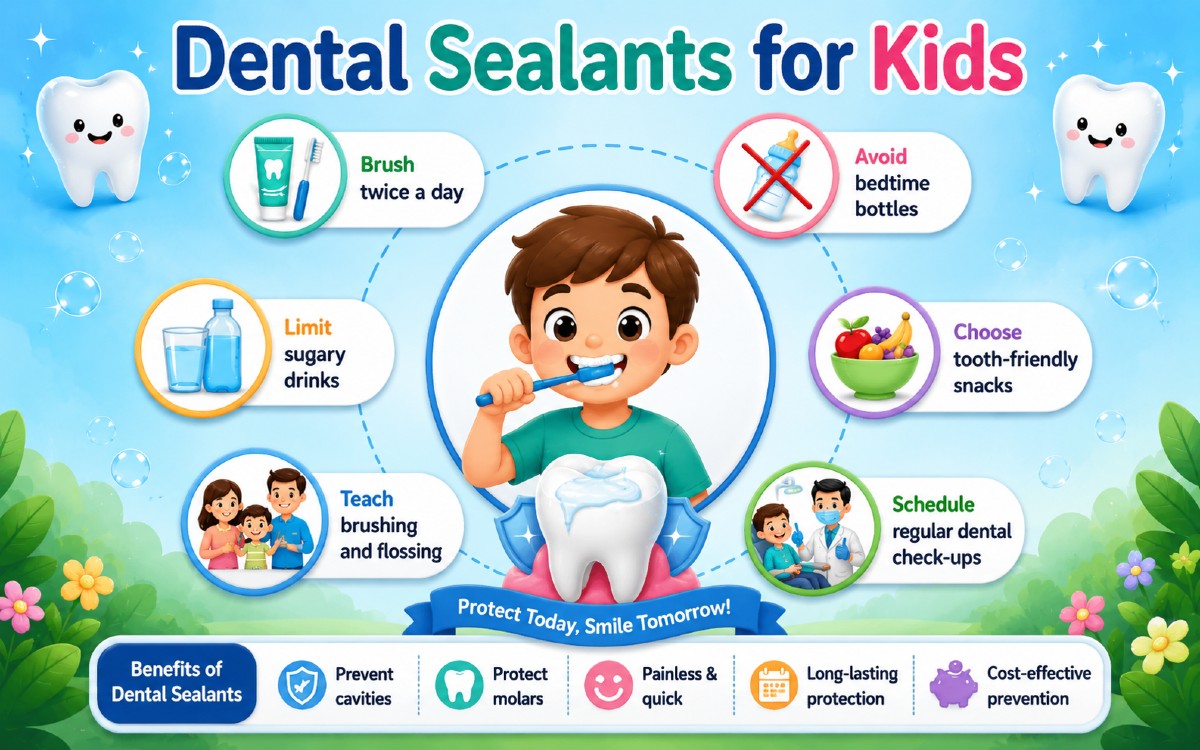
Benefits of Dental Sealants for Kids
Here are some major benefits of dental sealants:
1. Excellent Cavity Protection
Sealants provide strong protection against tooth decay.
2. Quick and Painless
No drilling, injections, or discomfort.
3. Cost-Effective Prevention
Preventing cavities is usually much cheaper than treating them.
4. Long-Lasting Protection
Sealants can last several years with proper care.
5. Better Oral Health
They reduce future dental problems and help maintain healthy teeth.
At What Age Should Kids Get Dental Sealants?
Most children benefit from sealants as soon as their permanent molars erupt.
This usually happens around:
Age 6 (first molars)
Age 12 (second molars)
Early application provides protection during cavity-prone years. A best child dentist specialist can determine the right time based on your child’s dental development.
Are Dental Sealants Safe?
Yes, dental sealants are considered safe and widely recommended by dentists. They have been used for decades as an effective preventive dental treatment. Parents can feel confident knowing sealants are designed to protect teeth without causing harm.
Do Sealants Replace Brushing and Teeth Cleaning?
No.Dental sealants are not a replacement for proper oral hygiene. They are an added layer of protection.
Children still need to:
Brush twice daily
Floss regularly
Maintain regular teeth cleaning habits
Visit the dentist routinely
Sealants work best when combined with good oral care.
Signs Your Child May Need Extra Cavity Protection
Some children have a higher risk of cavities.
Your child may benefit from sealants if they:
Frequently eat sugary foods
Have poor brushing habits
Already have cavities
Have deep grooves in molars
Experience early signs of tooth decay
Regular visits to a Pediatric Dentist in Greater Noida can help identify these risks early.
Tips to Prevent Cavities in Kids
Along with dental sealants, follow these cavity-prevention tips:
Encourage Proper Brushing
Help children brush for two minutes twice daily.
Limit Sugary Foods
Reduce candies, chocolates, and soft drinks.
Schedule Routine Dental Checkups
Early detection prevents bigger problems.
Focus on Teeth Cleaning
Good cleaning habits reduce plaque and bacteria.
Choose Preventive Dental Care
Treatments like fluoride and sealants offer extra protection.
Why Preventive Dentistry Matters
Preventive dentistry helps avoid painful and expensive treatments later. Instead of treating cavities after they develop, preventive care focuses on stopping problems before they start.
This includes:
Regular dental checkups
Professional teeth cleaning
Fluoride treatments
Dental sealants
This proactive approach keeps children healthier and more comfortable.
Conclusion
So, do dental sealants really prevent cavities? Absolutely. Dental sealants are one of the most effective ways to protect your child’s teeth from cavities—especially those hard-to-clean back molars. They are safe, painless, cost-effective, and highly recommended by dental experts. When combined with proper teeth cleaning, healthy eating, and regular dental checkups, sealants can significantly improve your child’s oral health. If you want to protect your child’s smile from cavities, now is the perfect time to act.
Book Your Child’s Dental Checkup Today
Consult a trusted best child dentist specialist or experienced Pediatric Dentist in Greater Noida to learn whether dental sealants are right for your child.
A healthy smile starts with preventive care.