
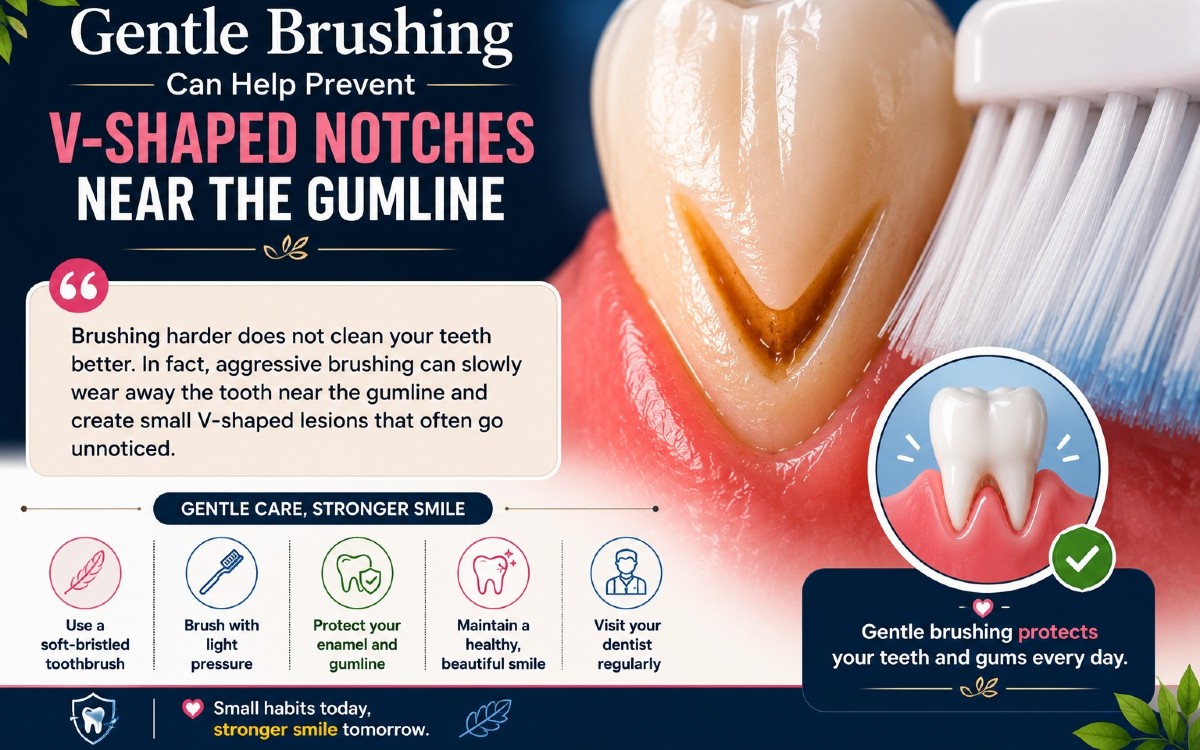
Gentle Brushing Can Help Prevent V-Shaped Notches Near the Gumline
Brushing your teeth every day is one of the best habits for maintaining good oral health. However, many people don't realize that brushing too hard can actually damage their teeth instead of protecting them.
One common problem caused by aggressive brushing is tooth abrasion, which can lead to V-shaped notches near the gumline, tooth sensitivity, and long-term damage if left untreated.
The good news is that this condition is often preventable. By using the right brushing technique and maintaining proper oral care, you can protect your teeth and gums for years to come.
What Are V-Shaped Notches Near the Gumline?
V-shaped notches are wedge-shaped grooves that develop where the tooth meets the gum. Dentists often refer to these as non-carious cervical lesions (NCCLs) because they are not caused by cavities.
Instead, they result from gradual wear of the tooth structure due to mechanical stress and other contributing factors.
These notches commonly appear on:
Premolars
Canines
Front teeth
Teeth that experience heavy brushing pressure
As the notch becomes deeper, the inner layer of the tooth (dentin) becomes exposed, making the tooth more sensitive.
What Causes V-Shaped Notches?
Several factors can contribute to the development of these notches.
Brushing Too Hard
This is one of the leading causes. Applying excessive pressure while brushing gradually wears away the enamel near the gumline.
Using a Hard-Bristled Toothbrush
Hard bristles can be abrasive and may damage both enamel and gums over time.
Incorrect Brushing Technique
Horizontal back-and-forth scrubbing places repeated stress on the same area of the tooth.
Tooth Grinding (Bruxism)
Grinding or clenching teeth creates additional stress that may contribute to tooth wear.
Acidic Foods and Drinks
Frequent consumption of acidic beverages can weaken enamel, making it easier for brushing to cause damage.
Symptoms You Should Watch For
Early detection can prevent further damage.
Common symptoms include:
Tooth sensitivity to cold, hot, sweet, or acidic foods
Sharp tooth pain while brushing
Small V-shaped grooves near the gumline
Discomfort when drinking cold water
Receding gums around affected teeth
Rough or uneven tooth surfaces
If you notice any of these signs, schedule a dental examination before the damage worsens.
Why Does Tooth Sensitivity Occur?
The outer enamel protects the sensitive dentin underneath.
When a V-shaped notch forms, dentin becomes exposed. Tiny microscopic channels inside dentin connect directly to the tooth's nerve.
Cold drinks, hot beverages, sweet foods, or even cool air can stimulate these channels, leading to sudden tooth sensitivity or sharp pain.
How Gentle Brushing Helps Protect Your Teeth
Gentle brushing removes plaque effectively without damaging the enamel.
Here are a few simple changes that can make a big difference.
Choose a Soft-Bristled Toothbrush
Soft bristles clean teeth thoroughly while being gentle on enamel and gums.
Hold the Brush Lightly
If you're gripping your toothbrush tightly, you're probably brushing harder than necessary.
Brush Using Small Circular Motions
Instead of scrubbing back and forth, use gentle circular movements.
Brush for Two Minutes
Brushing longer doesn't mean brushing harder. Two minutes is enough to clean your teeth properly.
Replace Your Toothbrush Regularly
Replace your toothbrush every three to four months or sooner if the bristles become frayed.
How Dentists Treat V-Shaped Notches
Treatment depends on the severity of the lesion.
Desensitizing Toothpaste
For mild cases, your dentist may recommend toothpaste designed to reduce tooth sensitivity.
Fluoride Treatment
Professional fluoride applications help strengthen exposed tooth surfaces.
Tooth-Colored Fillings
If the notch becomes deep, a tooth-colored filling can restore the damaged area and reduce sensitivity.
Night Guard
Patients who grind their teeth may benefit from a custom-made night guard.
Brushing Technique Correction
Your dentist may also demonstrate safer brushing techniques to prevent further damage.
Can Children Develop V-Shaped Notches?
Although this condition is more common in adults, children can also develop enamel wear if they brush aggressively or use improper brushing techniques.
Parents should supervise brushing, especially in younger children, and encourage the use of soft-bristled toothbrushes.
If your child complains of tooth pain or sensitivity, consult a dentist for an evaluation. Searching for a trusted kids dentist near me can help you find a professional experienced in children's oral health.
Tips to Prevent V-Shaped Notches
Simple daily habits can make a big difference.
Brush gently using a soft-bristled toothbrush.
Avoid aggressive scrubbing.
Use fluoride toothpaste.
Limit acidic drinks and snacks.
Wear a night guard if you grind your teeth.
Visit your dentist every six months.
Replace worn toothbrushes regularly.
Preventive care is always easier and less expensive than restorative treatment.
When Should You See a Dentist?
Schedule a dental appointment if you notice:
Persistent tooth sensitivity
Visible V-shaped grooves near the gumline
Pain while brushing
Gum recession
Pain when eating cold or sweet foods
Early diagnosis allows your dentist to recommend conservative treatment before the damage becomes severe.
Conclusion
Brushing your teeth should protect your smile, not damage it. While daily brushing is essential, using excessive force can gradually wear away the tooth near the gumline and create V-shaped notches near the gumline.
Fortunately, gentle brushing, proper technique, and regular dental checkups can significantly reduce the risk of this condition. If you're already experiencing tooth sensitivity or tooth pain, don't ignore the symptoms. Early treatment can prevent further damage and keep your smile healthy.
If you're looking for guidance on proper brushing techniques or need a dental evaluation, schedule a visit with your dentist today. And if your child is experiencing dental discomfort, finding a trusted kids dentist near me can ensure they receive the right care from an early age.
Frequently Asked Questions (FAQs)
1. What are V-shaped notches near the gumline?
They are wedge-shaped grooves that develop where the tooth meets the gum. They are usually caused by aggressive brushing, tooth grinding, or enamel wear rather than cavities.
2. Can brushing too hard damage my teeth?
Yes. Brushing with excessive force or using a hard-bristled toothbrush can wear away enamel and contribute to V-shaped notches near the gumline.
3. Why do V-shaped notches cause tooth sensitivity?
As enamel wears away, the dentin underneath becomes exposed. This allows hot, cold, sweet, or acidic foods to stimulate the tooth's nerve, causing sensitivity.
4. Can V-shaped notches be treated?
Yes. Depending on their severity, treatment may include desensitizing toothpaste, fluoride therapy, tooth-colored fillings, or a night guard if tooth grinding is a contributing factor.
5. How can I prevent V-shaped notches?
Use a soft-bristled toothbrush, brush gently with small circular motions, avoid excessive force, limit acidic foods, and visit your dentist regularly for checkups.