
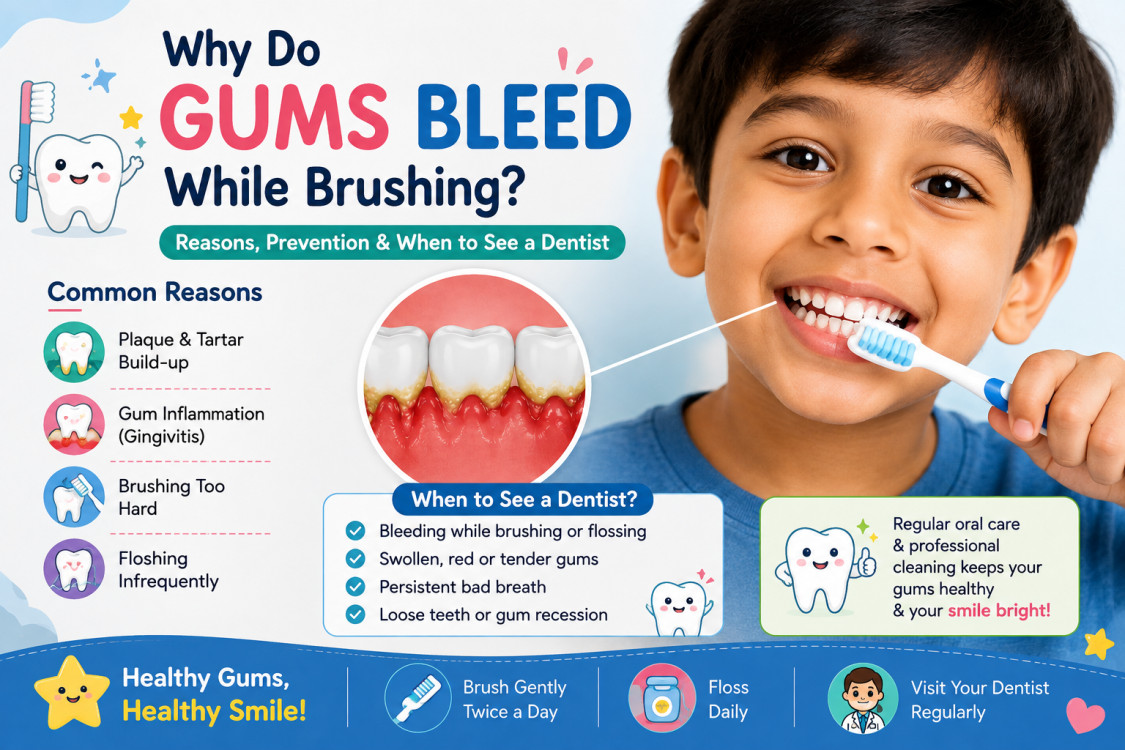
Why Do Gums Bleed While Brushing? Reasons, Prevention and Visit the Dentist
Healthy gums shouldn’t normally be bleeding during brushing and flossing sessions.
If you only have experienced a single instance of bleeding due to excessive brushing, you can just consider that an irritation issue. But if there’s persistent bleeding with any of the other symptoms such as swelling, redness, pain, bad breath and sensitive gums, then your gums need to be seen by professionals.
If not attended to, the bleeding could allow the buildup of plaque and inflammation on the supporting tissues of your teeth.
What Causes Bleeding Gums?
Bleeding of gums while brushing or flossing may occur due to a number of causes.
1. Accumulation of Plaque
Plaque is a bacterial film that constantly forms on the surface of the teeth. If plaque is not removed properly by brushing and flossing, it can accumulate near the gum line.
The bacteria in the plaque may irritate the gums, leading to redness, inflammation and bleeding.
2. Gingivitis
Gingivitis is an early stage of gum disease where the gums are inflamed.
Some common symptoms of gingivitis include:
Inflamed gums
Gum bleeding while brushing
Painful gums
Bad breath
Increased sensitivity of the gum line
Gingivitis can be controlled successfully when it is diagnosed at an early stage.
3. Brushing Too Vigorously
Brushing too forcefully is not always a guarantee that you will get your teeth clean. Actually, brushing aggressively can harm your gums and cause gum recession.
It is advisable to use a brush with soft bristles and a gentle brushing method.
4. Flossing Rarely
If you floss rarely and suddenly start flossing, you may experience bleeding.
This may be as a result of the inflammation of your gums caused by the buildup of plaque between your teeth. Through continued gentle flossing, this bleeding might stop as your gums become healthier.
But it is wise to consult a dentist about continuous bleeding.
5. Tartar Build-Up
Dental plaque that stays on the tooth surface for a long time will result in tartar. Tartar is different from dental plaque because once it is formed, it cannot be brushed away by normal brushing.
The presence of tartar near the gums may lead to gum irritation and gum bleeding.
Is Bleeding Gums a Symptom of Gum Disease?
Yes, as persistent bleeding gums could indicate an early symptom of gum disease.
Gum disease is often gradual in its development. Initially, the gums may simply look red or have bleeding upon brushing. In case the infection persists, the gum disease affects the structures that support the teeth.
Advanced stages of gum disease include the following symptoms:
Gum recession
Bad breath
Inflammation of the gums
Loose teeth
Pain when eating
Teeth do not fit well together
That is why the problem of recurrent bleeding gums should not be overlooked due to lack of pain.
Could Poor Dental Hygiene Be the Reason for Bleeding Gums?
Yes. Failure to brush and floss regularly may result in the buildup of plaque near and between the teeth.
Your routine for dental hygiene should include:
Brushing two times a day
Rinsing between your teeth on a regular basis
Use of fluoride toothpaste
Restricting snacking on sweets frequently
Changing your toothbrush
Dental visits regularly
While proper home dental care is necessary for keeping your gums healthy, it cannot replace your professional dental assessment.
Does Professional Teeth Cleaning Help Bleeding Gums?
Professional teeth cleaning will help eliminate plaque and tartar, which cannot be eliminated properly by brushing alone.
Plaque and tartar can be removed with professional cleaning and thus, oral hygiene will be improved and bleeding gums will start healing if the problem lies in plaque or tartar formation.
Professional cleaning does not serve as a diagnostic procedure. If the bleeding gums are caused by gum disease or some other dental problem, further treatment will be needed.
When Should You See a Dentist for Bleeding Gums?
Mild gum bleeding might stop once you improve your brushing and flossing practices. But you need to see a dentist if:
Your gums bleed frequently
Gum bleeding persists for weeks
Your gums are swollen or sore
You have constant bad breath
Your teeth are sensitive
Your gums seem to pull away from your teeth
You are experiencing loose teeth
Your gums hurt while chewing
There is pus or swelling near your gums
Consult a General Dentist in Greater Noida to check on your teeth and gums and suggest a solution to the problem.
What Occurs During a Dental Exam?
During a dental exam to determine bleeding gums, some things that the dentist might check are the status of the patient’s teeth, gums, and surrounding tissues.
Some things that might be checked during a dental exam include:
Presence of plaque and calculus
Swelling of the gums
Bleeding spots
Recession of the gums
Decay in the teeth
Mobility of the teeth
Infection
If necessary, some tests like dental X-rays might be suggested.
The treatment plan will depend on the cause of the problem and not just bleeding gums.
How Can You Stop Bleeding Gums?
Following an easy and regular oral care schedule can prevent any issues of the gums.
Brush Gently Twice a Day
Gentle brushing can be done with a toothbrush having soft bristles using circular motions. Avoid putting much pressure on the gums.
Clean in Between Your Teeth
Simple brushing cannot help you clean every space in between the teeth.
Avoid Foods That Are High in Sugar Content
Overeating foods that are high in sugar content could lead to cavities and other oral problems.
Consume Sufficient Amounts of Water
Drinking enough water helps flush out any remaining food debris in the mouth.
Change Your Toothbrush Regularly
The toothbrush should be changed once the bristles wear out to avoid ineffective brushing.
Visit the Dentist Regularly
Visiting the dentist regularly ensures that any issues in the mouth can be identified early on.
Importance of Dental Check-ups in the Absence of Any Discomfort
Many dental conditions can arise without there being any serious discomfort initially.
One can suffer from issues such as plaque accumulation, early signs of gingival disease or tooth decay without experiencing any change in their everyday activities.
Dental check-ups at a Dental Clinic Greater Noida will help you find out more about these conditions and give you advice on prevention as per your oral health needs.
Preventive dentistry is also important for encouraging good brushing and eating habits.
How to Select the Perfect Dentist?
The following parameters are to be considered when selecting a dentist:
Experience and qualifications
Dental services offered
Attitude towards dental care prevention
Sterilization methods
Provision of proper diagnostic facilities
Ease of treatment
In case families need to find the Best Dentist in Greater Noida, it is important to select a dental professional who will provide not only a treatment for existing diseases, but will prevent any dental disorders in the future.
Can Children Have Bleeding Gums?
Gums may also bleed in children. Sometimes, this can be due to improper brushing or presence of plaque. It can also happen because children tend to avoid brushing in painful spots.
It is necessary to be attentive in case of regular bleeding, swelling of the gums and painful brushing process in children.
Good habits of brushing and flossing have to be cultivated since early childhood.
In case of ongoing problem, it is recommended to visit a pediatric dentist.
Frequently Asked Questions
1. Why do my gums bleed each time I brush?
Bleeding could be related to plaque build-up, gum inflammation, tartar, aggressive brushing, or other dental issues. If the bleeding occurs regularly, it is advised that you see a dentist.
2. Can bleeding gums get cured on their own?
It is possible that minor gum inflammation improves with proper brushing and flossing, but regular bleeding cannot be ignored. It is up to the dentist to decide if any further actions have to be taken.
3. Should bleeding happen during flossing?
Bleeding might happen when a person begins to floss after long periods of not cleaning between the teeth properly. But regular bleeding should not be overlooked as it can show gum inflammation.
4. Does dental cleaning stop the gums from bleeding?
Cleaning can help remove tartar and plaque that cause irritation of the gums. But if there are any other diseases like gum disease, then further measures should be taken.
5. Can aggressive brushing cause bleeding?
Yes. Brushing too hard can cause irritation of the gums. Using a soft toothbrush and gentle brushing technique is usually enough for healthy gums.
Conclusion
Gum bleeding might seem to be a minor issue, but frequent gum bleeding could be a sign of an infection, gum disease or excessive plaque formation. Good oral hygiene and regular visits to the dentist can help prevent this problem.
It would be better to visit a dentist if you still have gum bleeding even when you improve your oral hygiene practice.
Dental care will help in diagnosing the cause and preventing the progression of the problem.