
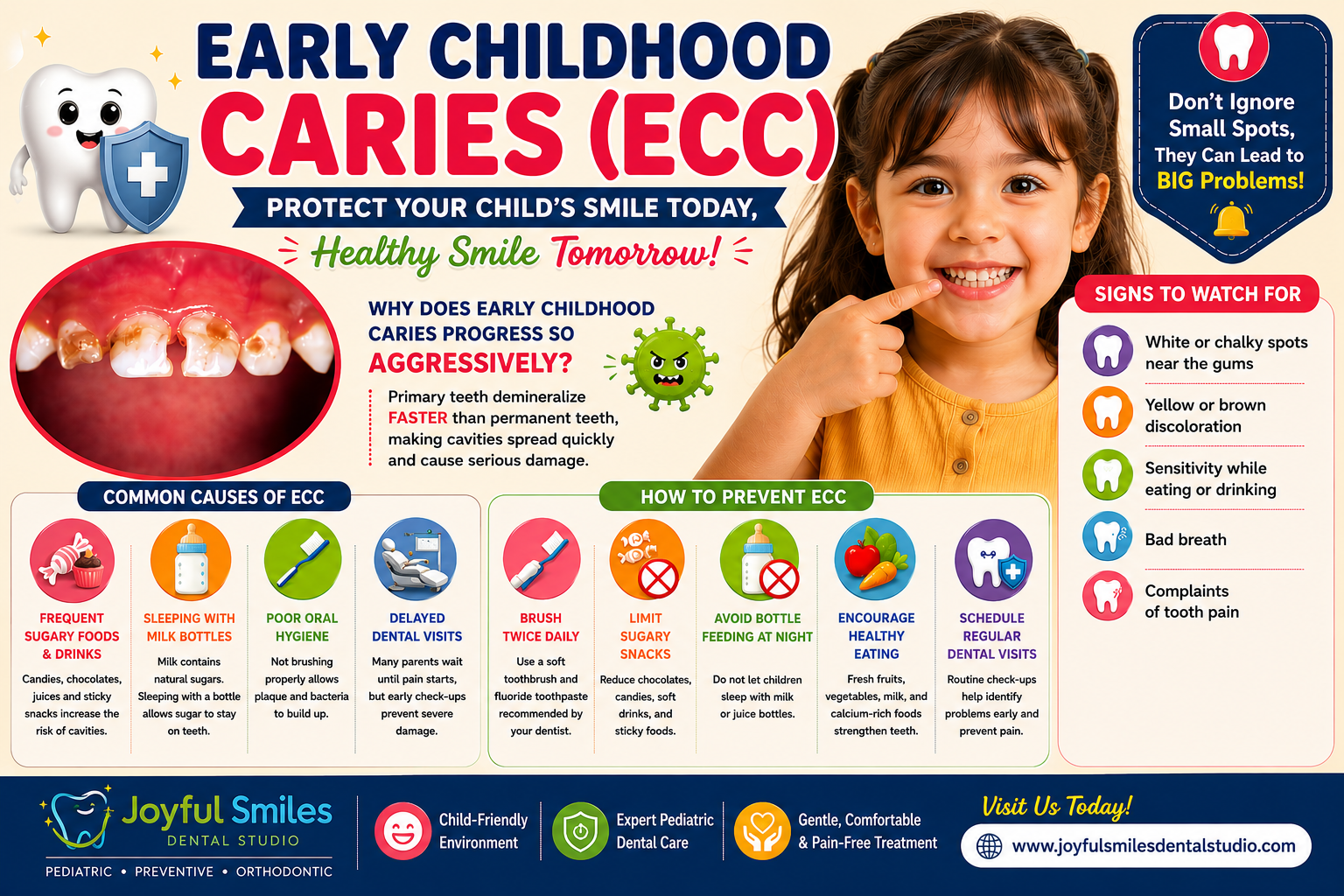
Early Childhood Caries (ECC): Protecting Your Child’s Smile from Tooth Decay
A child’s smile is often the first thing parents notice in photographs, school events, and everyday moments. Those tiny teeth may seem temporary, but they play a major role in a child’s overall health, speech development, confidence, and facial growth. Unfortunately, many parents underestimate how quickly tooth decay in children can progress when early signs are ignored.
Early Childhood Caries (ECC), commonly known as severe tooth decay in babies and young children, is one of the most common dental conditions affecting children worldwide. What may begin as a small white spot on a tooth can silently progress into pain, infection, difficulty eating, disturbed sleep, and long-term oral health complications if left untreated.
With proper awareness and timely pediatric dental care, parents can protect their child’s smile and prevent serious dental problems in the future.
What is Early Childhood Caries (ECC)?
Early Childhood Caries is a form of tooth decay that affects infants and children under the age of six. It develops when bacteria in the mouth feed on sugars from milk, juice, snacks, or sticky foods, producing acids that gradually weaken tooth enamel.
ECC often starts subtly. Parents may first notice:
White or chalky spots near the gum line
Yellow or brown discoloration
Sensitivity while eating or drinking
Bad breath
Complaints of tooth pain
Because baby teeth are smaller and softer than permanent teeth, decay spreads much faster in children than in adults. Without timely treatment, these cavities can become painful and may even affect the development of permanent teeth.
Why Baby Teeth Are Important
Many parents believe baby teeth will eventually fall out, so minor cavities are not a serious concern. However, healthy primary teeth are essential for:
Proper chewing and nutrition
Clear speech development
Maintaining space for permanent teeth
Supporting facial structure and jaw growth
Building self-confidence through a healthy smile
Untreated dental problems during childhood can affect a child’s appearance, eating habits, and social confidence. Children with visible cavities or damaged teeth may feel shy while smiling or speaking in public.
Common Causes of ECC
1. Frequent Sugary Foods & Drinks
Candies, chocolates, juices, flavored milk, and sticky snacks increase the risk of cavities by feeding harmful bacteria in the mouth.
2. Sleeping with Milk Bottles
Milk contains natural sugars. Sleeping with a bottle allows sugars to remain on teeth for long periods, increasing the risk of decay.
3. Poor Oral Hygiene
Not brushing properly allows plaque and bacteria to build up, leading to enamel damage and cavities.
4. Delayed Dental Visits
Many parents wait until pain starts before visiting a dentist. However, early dental check-ups help detect problems before they become severe.
5. Lack of Preventive Dental Care
Regular fluoride treatments and professional cleaning play an important role in preventing cavities in young children.
How Untreated Tooth Decay Worsens Over Time
Early cavities may seem harmless at first, but untreated dental issues rarely stay the same. Tooth decay gradually spreads deeper into the tooth structure, leading to:
Severe pain and sensitivity
Gum swelling and infections
Difficulty eating and sleeping
Premature tooth loss
Misalignment of permanent teeth
Speech and chewing problems
In advanced cases, children may avoid smiling confidently because of visible decay or damaged teeth. This is why early intervention and professional pediatric dental care are so important.
How to Prevent Early Childhood Caries
Brush Twice Daily
Use a soft toothbrush and fluoride toothpaste recommended by your dentist. Parents should supervise brushing habits in younger children.
Limit Sugary Snacks
Reduce chocolates, candies, soft drinks, and sticky foods that contribute to cavities.
Avoid Bottle Feeding at Night
Do not let children sleep with milk or juice bottles, as prolonged sugar exposure damages teeth.
Encourage Healthy Eating
Fresh fruits, vegetables, milk, and calcium-rich foods help strengthen teeth and maintain good oral health.
Schedule Regular Dental Visits
Routine dental check-ups help identify problems early and reduce the need for painful or extensive treatments later.
If parents notice early signs of cavities, consulting a kid's dentist near me can help prevent serious dental complications and keep a child’s smile healthy.
When Should a Child Visit the Dentist?
Experts recommend the first dental visit by the age of one year or within six months of the first tooth eruption. Early visits help children become comfortable with dental care while allowing dentists to detect problems before they worsen.
Early identification of dental problems reduces:
Discomfort
Duration of treatment
Risk of severe cavities
Future dental complications
Parents searching for a trusted Pediatric Dentist in Greater Noida should prioritize clinics that focus on preventive dental care, child-friendly treatment, and early cavity detection.
Importance of Regular Pediatric Dental Care
Routine dental visits are not only about treating cavities. Preventive dental care helps monitor oral development, improve hygiene habits, and reduce future complications.
Professional pediatric dentists can guide parents on:
Proper brushing techniques
Healthy dietary habits
Fluoride protection
Cavity prevention methods
Orthodontic growth monitoring
Choosing experienced pediatric dental specialists ensures children receive comfortable and personalized treatment in a friendly environment.
Final Thoughts
Early Childhood Caries can progress rapidly, but it is highly preventable with proper oral hygiene, healthy eating habits, and regular dental check-ups. Small dental problems can become serious over time if ignored, affecting not only teeth but also a child’s comfort, facial appearance, confidence, and overall oral health.
Healthy habits started during childhood help create strong teeth and confident smiles for life. Parents should never ignore early signs of decay because timely treatment can protect both primary and permanent teeth while reducing future dental complications.